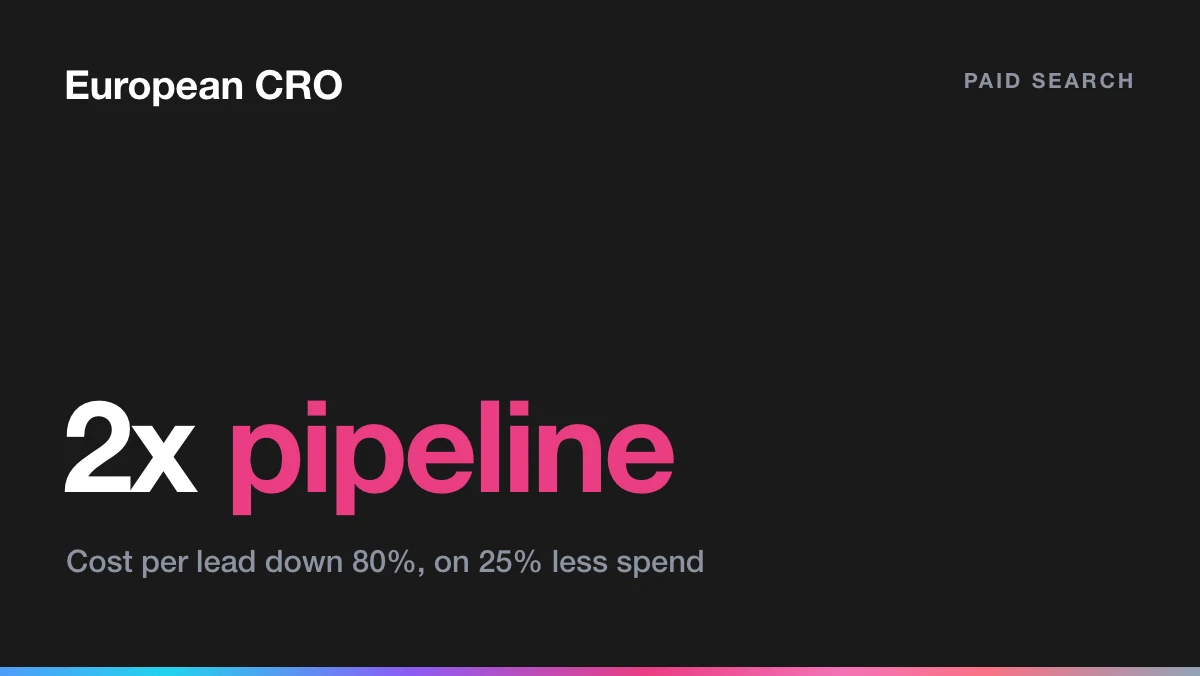
European CRO
Owning the Funnel: How a European CRO Doubled Pipeline on 25% Less Spend
80% lower
Cost per lead
~2x
Sales pipeline
PPCMarketing Ops
Our client provides integrated pre- and post-analytical support for laboratories, pharmaceutical companies, CROs, and direct-to-consumer health businesses: custom specimen collection kitting, mobile phlebotomy, temperature-controlled medical courier services, and the LIS and EMR integrations that tie it all together. Founded by laboratory operations veterans with careers at national reference laboratories and genomics companies, the business handles tens of millions of specimens a year for hundreds of laboratories nationwide.
The differentiator is real: where competitors typically sell one service line, this company replaces three or four vendors with one integrated partner, backed by ISO 13485 and ISO 9001 certification, FDA registration, HIPAA compliance, and IATA certification. The marketing did not tell that story. A Squarespace brochure site, seven ranking keywords, and no way to capture or follow up on a lead meant the company was winning business on referrals and founder credibility alone.
The client engaged Marzipan as its full-service marketing partner in early 2026 to build the function from the ground up. One 90-day roadmap covered the entire commercial stack: a new website, the analytics and CRM infrastructure underneath it, email marketing, paid search, and the trade show program. This case study covers what was built and what changed.
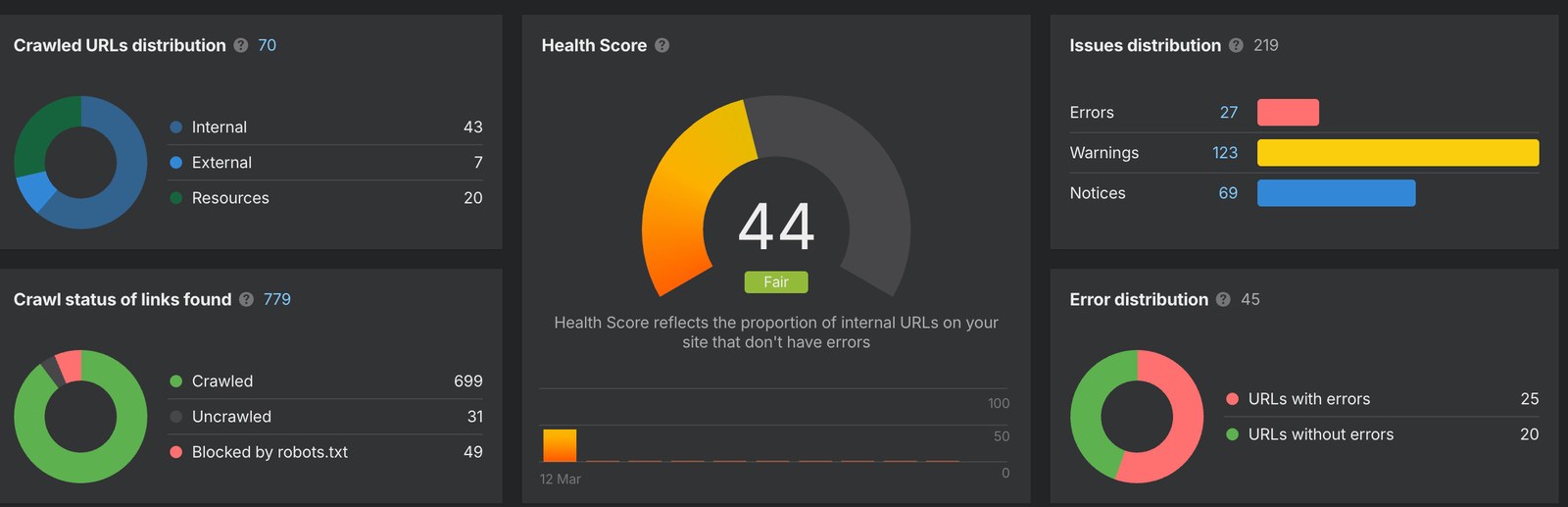
The starting point was documented before anything was rebuilt. The GA4 baseline covering January to mid-March 2026 showed roughly 60 users a day with a 34% engagement rate, 1.71 pages per session, and an 87% new-visitor share; the only configured "conversion" was a page view of the get-started page, which measures nothing a sales team can act on. Ahrefs told the same story from the outside: a site health score of 44, 27 crawl errors, 123 warnings, three 404s, 49 links blocked by robots.txt, and a backlink profile where 85% of links carried no authority. Organic search delivered around nine visits a month from seven keywords.
None of this reflected the company. The client had enterprise-grade certifications, a proprietary client portal, an integration engine competitors could not match, and written testimonials from CRO, pharma, and oncology lab clients. All of it sat buried in a template site with no conversion paths, no gated content, and an information architecture that treated the integrated service model, the single strongest selling point, as a footnote.
The brief was wider than a website. Every layer a working demand engine depends on was missing at once: no conversion tracking, no CRM configured for marketing, no email platform connected to the site, no paid acquisition, and no reporting. Building these in the wrong order wastes months. The 90-day roadmap sequenced them so that measurement existed before traffic was bought and follow-up existed before leads arrived.
The company was preparing for its next growth phase and wanted the marketing infrastructure in place before scaling demand, with one accountable partner rather than separate web, SEO, CRM, and advertising vendors. That is the engagement model Marzipan is built for: senior specialists covering the full commercial stack, working as one team.
The life science focus mattered as much as the breadth. The client sells regulated, technical services to lab directors, CRO procurement teams, and pharma operations leaders. Positioning, content, and campaign targeting all had to speak that language from the first draft, and the team writing the website copy needed to understand what pre-analytical support actually involves.
It also made the sequencing workable. Because the same team built the website, the tracking, the CRM fields, and the ad campaigns, every form fed Salesforce correctly on launch day, every campaign carried attribution data, and nobody spent a month reconciling two vendors' assumptions about what a lead is.
The roadmap ran in three phases across five workstreams, each sequenced so the next had something solid to stand on. Measurement came before traffic, follow-up before lead capture, and the website before the campaigns that would send buyers to it.
The new site was designed and built from scratch on Next.js, replacing the Squarespace template with an information architecture organized around what buyers actually evaluate: four service lines (kitting and supplies, specimen collection, courier services, technology) and dedicated pages for each audience the client serves, from clinical research and pharma to medical labs and direct-to-consumer health companies.
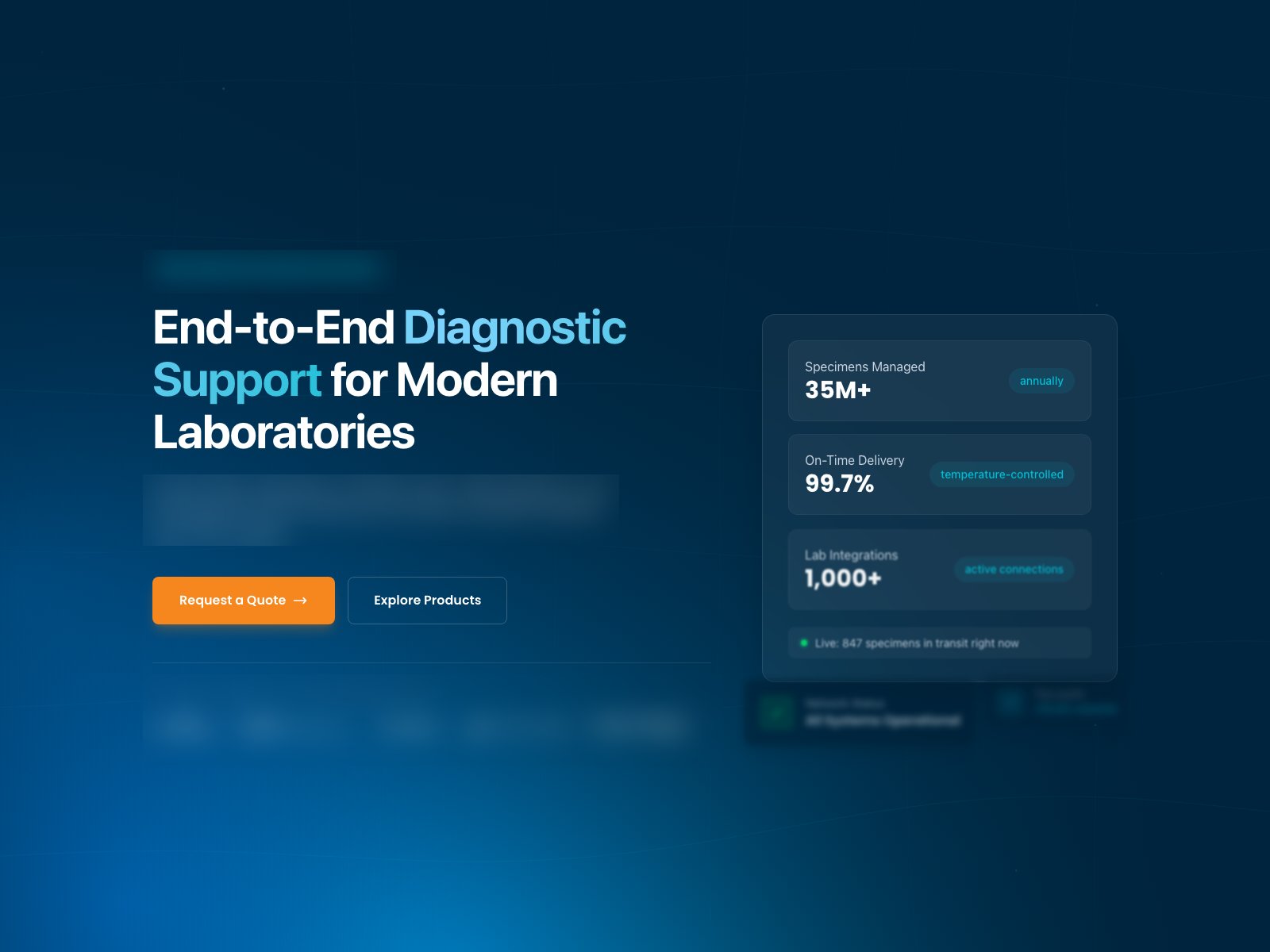
The integrated-partner story now leads. The homepage opens on the numbers that earn trust in this market (tens of millions of specimens managed annually, an on-time delivery record above 99%, more than a thousand live lab integrations) with client logos, certifications, and clear conversion paths on every page. Cookie compliance, opt-in consent on every form, and event-based conversion tracking were built in before launch rather than bolted on after.
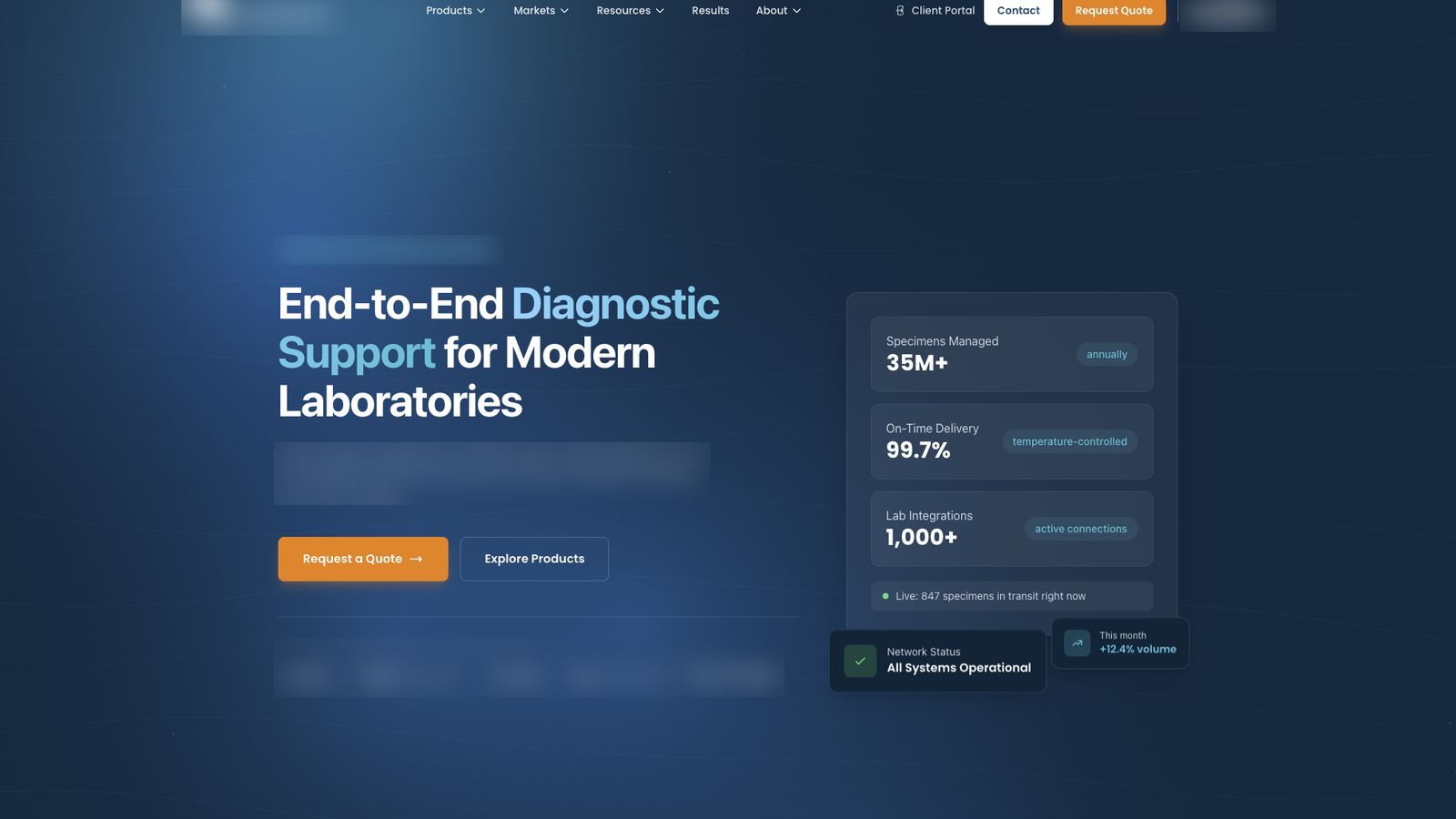
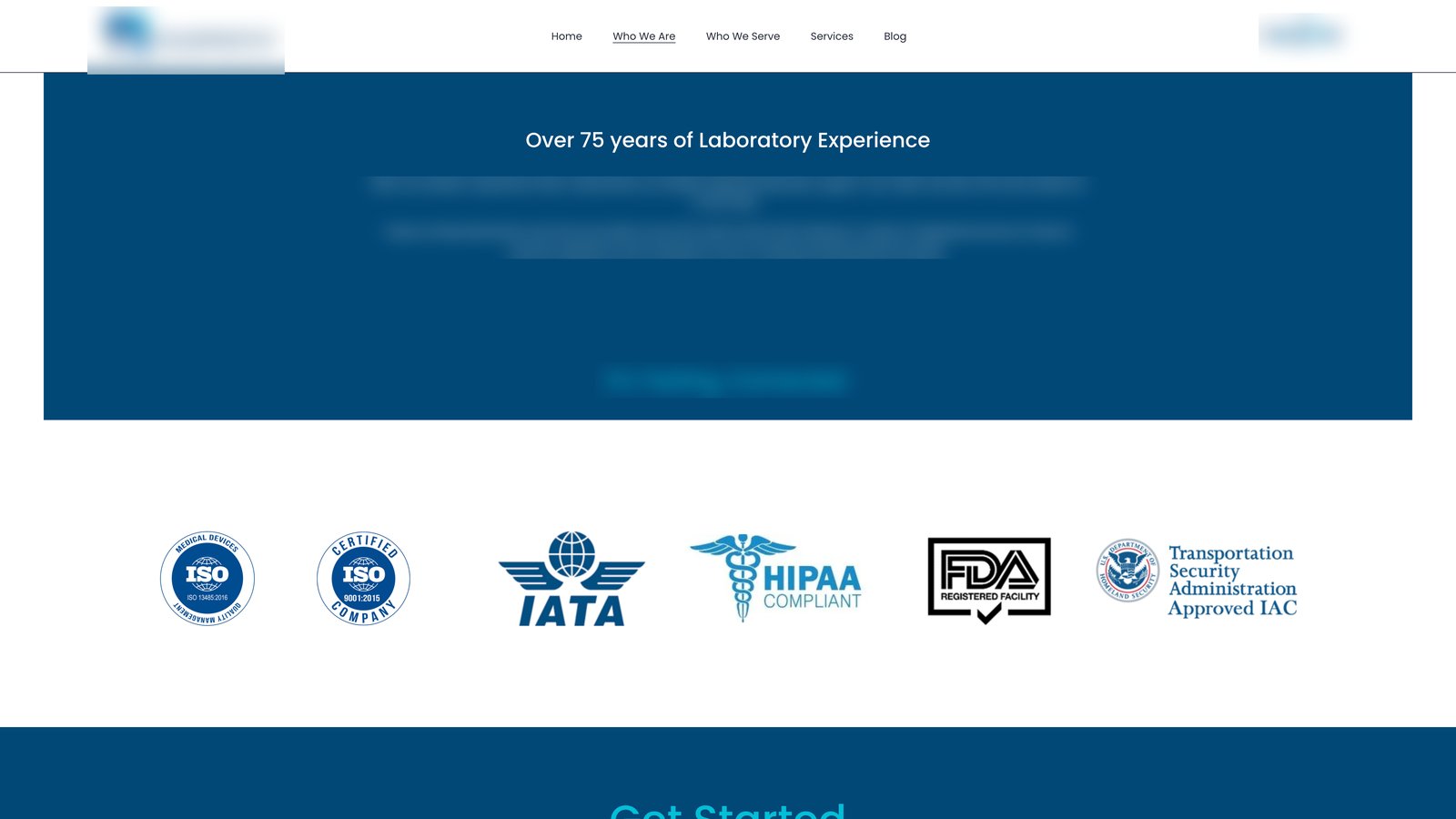
Drag the handle to compare the old site with the new one
The rebuild was treated as an SEO project from day one. Every page shipped with unique meta titles and descriptions, the nested title-template bug from the old site was eliminated, 301 redirects preserved every legacy URL, and the sitemap was cleaned of redirecting entries. A React-level audit covered rendering, accessibility, and crawlability before launch.
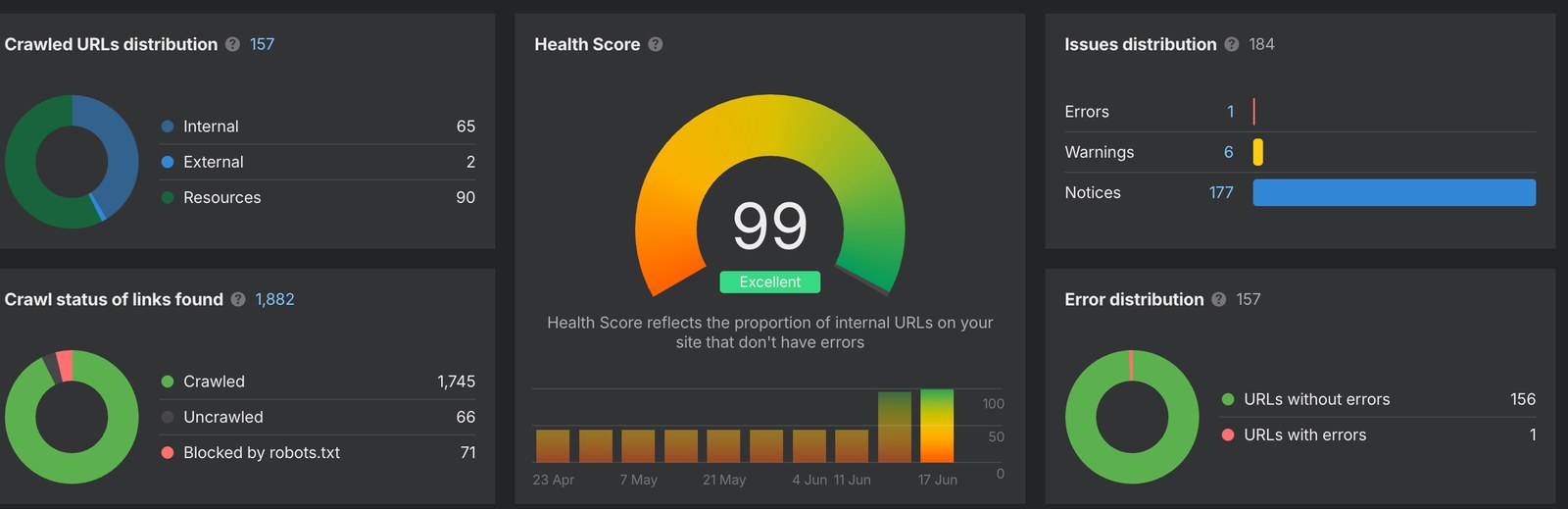
The before and after crawls tell the story: site health went from 44 to 99, crawl errors from 27 to 1, and warnings from 123 to 6, while the amount of indexable content more than doubled. On top of that foundation sits a keyword strategy built from competitor analysis, Ahrefs rank tracking for the terms that matter commercially, and a 20-piece content plan targeting the searches lab directors and CRO procurement teams actually run, starting with guides to clinical trial kitting, UN3373 Category B shipping, medical courier logistics, and LIS integration.
Salesforce was configured for marketing use across the Lead, Contact, Campaign, and Campaign Member objects: custom fields for segmentation, attribution, and compliance, lead assignment rules that route inquiries to the right owner, and reports and dashboards that let the commercial team manage performance from inside the CRM rather than a spreadsheet.
ActiveCampaign was connected end to end. Website forms write into the platform, a weekly email cadence runs against targeted segments, and the tracking misconfiguration that had been reporting email traffic as referrals in GA4 was found and fixed. The launch announcement email went out on the new templates in week one.
GA4 was rebuilt around events a sales team can act on, replacing the single page-view "conversion" with real form submission and inquiry tracking, wired through Google Tag Manager with cookie consent handled correctly. A Looker Studio dashboard gives the client a single view of website performance, and Salesforce dashboards cover the pipeline side.
With measurement in place, Google Ads was set up against a researched keyword plan targeting high-intent searches, with a dedicated PPC landing page template built for campaign traffic and geographic controls to keep spend inside the serviceable market. The first month's analytics review closed the loop: performance data now drives the phase-two plan.
The largest diagnostics conference on the US calendar became the test case for treating events as campaigns. Marzipan built the full system around the booth: exhibitor profile and event webpage, a delegate outreach list, pre-show announcement emails, booth backdrops, roll-up banners, and service-line one-pagers designed to match the new website, plus post-show list import and follow-up through ActiveCampaign.
The same design system extended into the sales toolkit: a master marketing deck, one-pagers for every service line, custom iconography for product areas and audience types, and presentation templates the internal team can reuse without a designer.
The new site launched in mid-June 2026 with the full stack live behind it. Site health moved from 44 to 99 on the day-one crawl. Errors dropped from 27 to 1 and warnings from 123 to 6. Forms feed Salesforce with attribution intact, email runs on a weekly cadence, paid search is live against tracked conversions, and the one-month analytics review is already steering budget. The difference from the baseline report is the point: the client went from one misconfigured page-view event to knowing exactly which channels produce inquiries.
Phase two shifts from foundation to growth: scaling the content plan against the keyword strategy, expanding paid campaigns from the first month's data, and building the demand engine the infrastructure was designed to carry.
For this client it covered strategy, website design and build, technical SEO and content planning, Salesforce configuration, email marketing setup, Google Ads, analytics and reporting infrastructure, trade show marketing, and sales collateral, delivered by one team on one roadmap. The scope flexes by client, but the principle holds: every layer a demand engine depends on, built in the right order by people who share context.
This client went from kickoff to a launched website with CRM, email, analytics, and paid search live in one 90-day roadmap: foundation in the first month, credibility content and collateral in the second, demand generation in the third. Timelines depend on scope and decision speed, but 90 days is realistic for a focused build with a single accountable decision-maker on the client side.
Because money spent before measurement works is money you cannot learn from. This client's old analytics counted a page view as a conversion, which made every channel look vaguely fine and none accountable. Rebuilding GA4 around real form submissions and inquiries, wired to Salesforce with attribution, meant the first dollar of ad spend produced usable data.
Alongside, almost always. Here, the founders drive the commercial relationships and domain expertise while Marzipan runs the marketing function: website, campaigns, CRM, reporting, and events. The weekly cadence keeps priorities shared, and everything built, from the CMS to the dashboards, is documented so the internal team owns it. diagnostics marketing services or view all case studies.